Quotes
Ideas about craft, creativity, and the standards that shape good work.
- Frank Lloyd Wright, as recalled by longtime client and friend Herbert Jacobs, on why designers must remain willing to reconsider what they have already made.
- Stanley Kubrick, in an interview with Playboy, on why the ideal creative life cannot be one of constant peace and contentment. An artist’s transcendence has to be found within the work itself.
- Garry Winogrand, speaking with students at the Rochester Institute of Technology, on the camera’s ability to turn its subject into something distinct, and why not knowing the result is the beginning of photography.
- Mike Markkula, Apple’s first investor and chairman, articulating why a product’s presentation is inseparable from its perceived quality, and why excellent work can be diminished by the way it is introduced.
- Steve Jobs, in an interview with The New York Times about the iPod, on why a designer’s job is not simply to make something look and feel beautiful, but to understand and elevate how that thing works.
- Jack Whitten, in an oral history interview, describing the interval between form and meaning as the place where his painting happens: the suspended instant after a diver leaves the board and before they reach the water.
- Sarah Charlesworth, in an oral history at her New York studio, describing a slow, recursive work cycle in which reading, drawing, experiments, props, and photographs feed one another before an idea finds its final form.
- Mike Monteiro, a designer and author, speaking at From Business to Buttons in Stockholm about how design encodes political choices, and why changing broken systems requires different people to shape them.
- David Keighley, IMAX’s Chief Quality Officer, on why excellence is a more useful standard than perfection, and why taking on unfamiliar responsibilities is one of the best ways to learn.
Production photograph of Stanley Kubrick standing with actors in spacesuits on the set of 2001: A Space Odyssey.
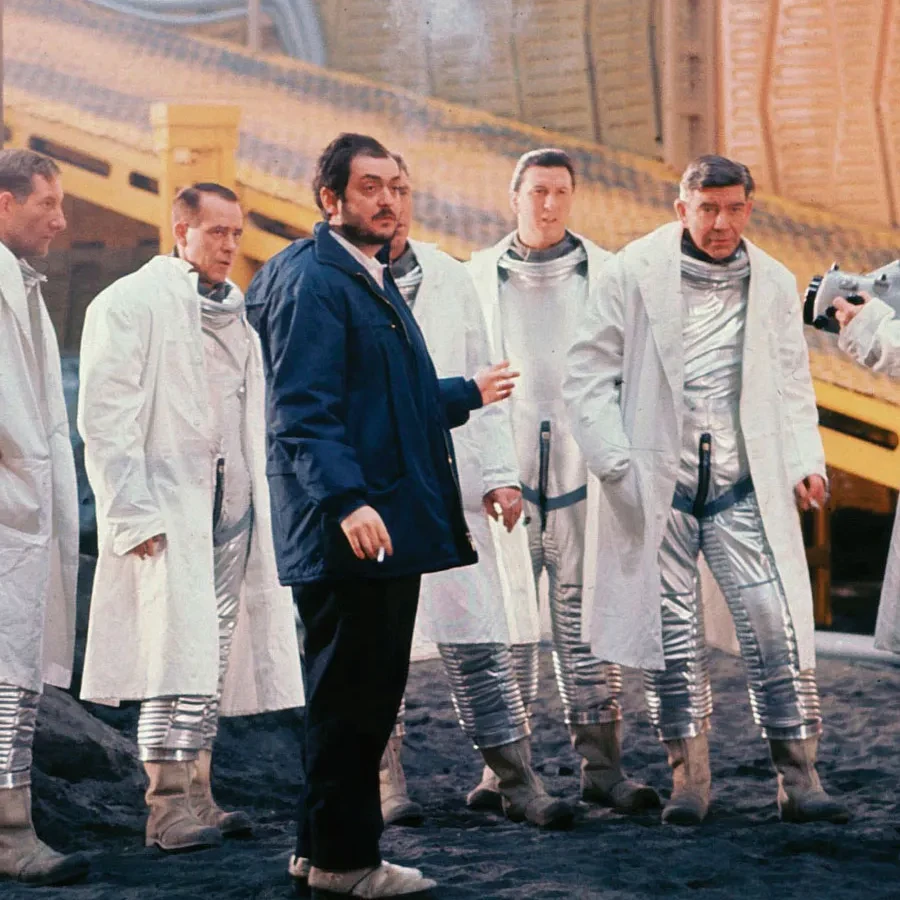
“The pervasive aura of peace and contentment is not the ideal state for an artist. It tranquilizes the creative personality, which thrives on conflict and on the clash and ferment of ideas. The artist’s transcendence must be within his own work; he should not impose any artificial barriers between himself and the mainspring of his subconscious.”